Monitoring the amount of hemolysis is an important quality measure in perfusion programs, yet traditional methods may fall short in providing reliable, actionable data.
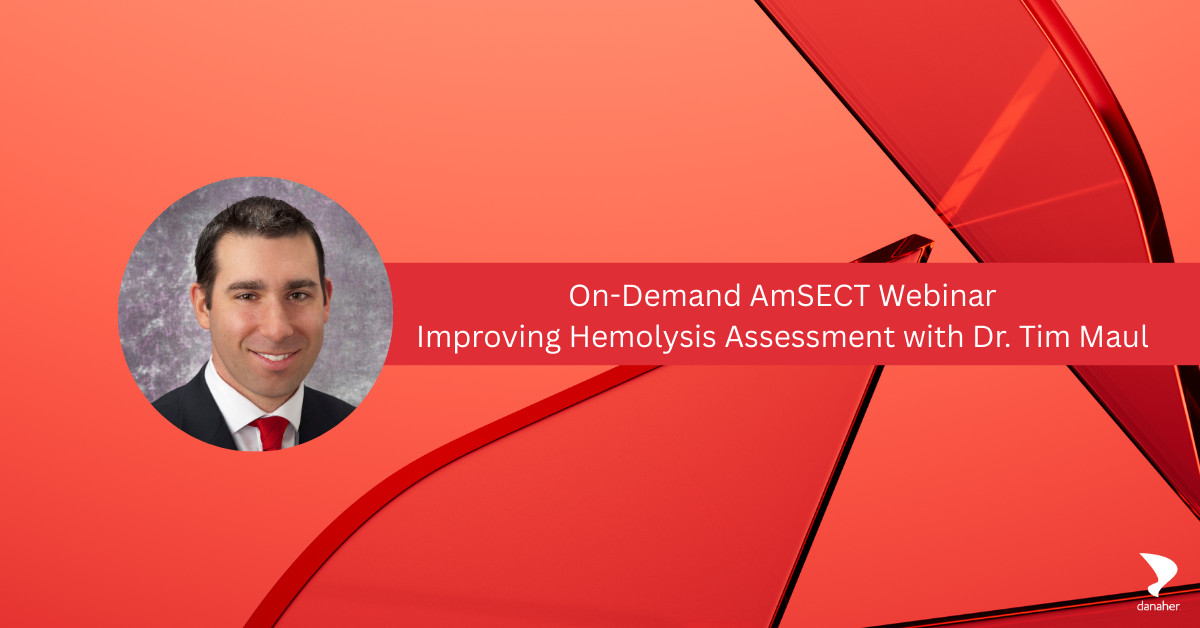
Tune in for a deep-dive session with Dr. Tim Maul of Nemours Children’s Health where he provides a practical look at how transitioning to specific, quantitative markers can enhance the documentation of blood quality and device performance.
Session Highlights:
Clinical significance: Examine the association between plasma-free hemoglobin and clinical risk factors such as mechanical stress and red cell damage.
Evaluating methodology: Compare the technical limitations of indirect hemolysis markers with the clarity of plasma-free hemoglobin measurement.
Benchmarking performance: Understand how to use quantitative data to track washout efficiency and plasma clearance rates in cell salvage QC.
Watch the 45-minute webinar and learn how perfusionists can lead the shift toward more specific, reliable hemolysis assessment to improve overall program oversight.
Speaker: Dr. Timothy Maul, CCP, FPP, PhD, Perfusionist and Senior Research Scientist – Nemours Children’s Health Florida