References
1. http://who.int/health-topics/anaemia
Last updated: August 2026



Could immediate access to hemoglobin results support more informed conversations and timely clinical decisions during the patient visit?
The HemoCue® Hb 301 System provides quick access to lab-quality hemoglobin results at the point of care, helping healthcare professionals screen for anemia during routine patient visits and gain immediate insights to support clinical decision-making. Results are available in seconds, enabling testing closer to the patient and supporting efficient clinical workflows.
Key highlights
Fill out the form to be contacted

Fast Hb results are important. Confidence in those results matters just as much.
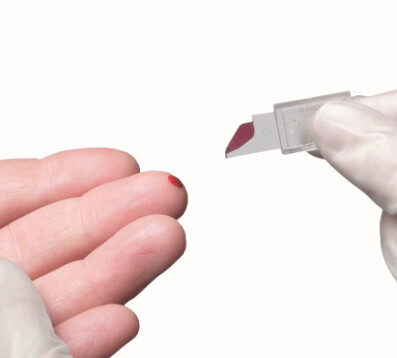
Fill the microcuvette with a drop of blood
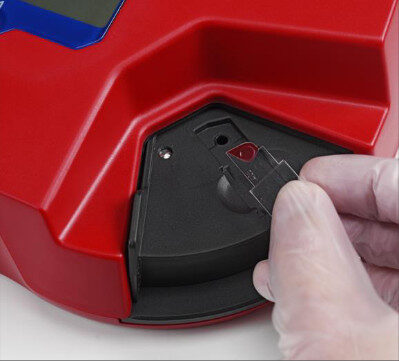
Place the microcuvette in the analyzer
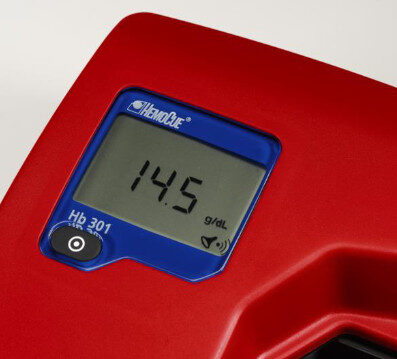
Receive a lab-quality result – within 3 seconds

According to the World Health Organization (WHO), anaemia remains a serious public health challenge, particularly among women and children. Accurate haemoglobin measurement is essential for identifying anaemia, informing screening programs, and supporting timely clinical decision-making.1
At HemoCue, we believe reliable diagnostic information should be available closer to the patient. For more than 40 years, HemoCue has helped healthcare professionals gain access to accurate results at the point of care.
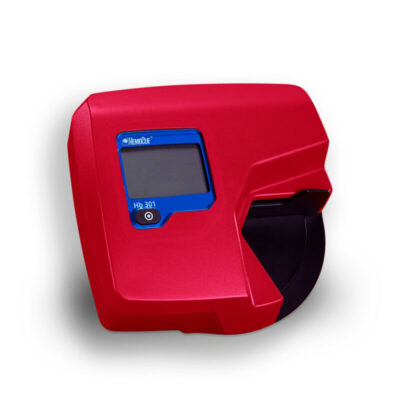
The HemoCue® Hb 301 System offers a simple and convenient solution for anemia screening with lab-quality results. Have confidence in your answers at the point of care.
It is good practice to clean the cuvette holder after each day of use. If the optronic unit becomes dirty, an error code will be displayed. To clean the optronic unit, please use a HemoCue® Cleaner and follow the maintenance guide in the Instructions for Use for the HemoCue® Hb 301 Analyzer.
Once a new HemoCue® Hb 301 Analyzer leaves the HemoCue production facilities, the analyzer is factory calibrated and needs no further calibration.
The cut-off levels for anemia vary by age and gender. It is the World Health Organization (WHO) that produces the guidelines for anemia testing and sets the recommended cut-off levels. Please visit the WHO website for the latest updates.
Operating temperature for the system is 10–40 °C (50–104 °F). The system
should not be operated at < 5% or > 90% non-condensing humidity.
Please consult the package insert for the HemoCue® Hb 301 Microcuvettes and the Instructions for Use for the HemoCue® Hb 301 Analyzer for further information.
A good capillary sampling technique is crucial to achieve optimal results. The Instructions for Use for the HemoCue® Hb 301 Analyzer have a detailed description of the steps with clear instructions on what to do and what not to do.
As stated in the IFU (Instructions for Use), it is recommended to verify unexpected results using venous blood or to confirm results by an alternative method.
References
1. http://who.int/health-topics/anaemia
Last updated: August 2026